| Material Quality | Silicon dioxide purity | High-purity fused silica is commonly specified at ≥99.99% SiO₂; higher purity may be required for semiconductor, analytical, or ultraviolet applications. | Review material certificates, chemical analysis, trace-element results, and batch identification records. | 12% | Full score when the certificate matches the purchase specification and batch number. |
| Material Quality | Hydroxyl content | For UV or semiconductor applications, a low-OH grade such as ≤10 ppm may be required; other heating applications may use a different OH range. | Request an OH-content test report and confirm the measurement method and sampling date. | 8% | Score according to the required wavelength, temperature, and process environment. |
| Optical Performance | UV and visible transmission | Transmission must be evaluated at the actual operating wavelength, tube wall thickness, and surface finish rather than by a generic percentage. | Check a wavelength-transmission curve from a spectrophotometer and compare it with a customer-approved sample. | 8% | Full score requires data at the actual operating wavelength. |
| Dimensional Control | Outer diameter and inner diameter | Tolerance should be defined on the approved drawing. A practical starting specification for many standard tubes is ±0.20 mm, subject to size and manufacturing process. | Use calibrated internal and external micrometers at multiple points along the tube. | 10% | Measure both ends and the middle section; record maximum deviation. |
| Dimensional Control | Wall thickness and concentricity | Wall thickness should be uniform enough for the application; the allowable variation must be stated on the technical drawing. | Measure wall thickness around the circumference and along the full effective length. | 8% | Deduct points for local thin areas, ovality, or unstable wall thickness. |
| Thermal Performance | Service temperature capability | Fused silica has a softening point of approximately 1,710°C, while practical continuous-use temperature depends on wall thickness, load, atmosphere, and thermal cycling. | Review the supplier’s application data, furnace conditions, thermal-cycle test, and installation recommendations. | 10% | Full score requires evidence under conditions similar to the intended use. |
| Thermal Performance | Thermal expansion coefficient | Fused silica has a very low linear thermal expansion coefficient of approximately 0.55 × 10⁻⁶/K near room temperature. | Check the material specification and confirm suitability for rapid heating and cooling. | 5% | Higher score when the grade and test data match the thermal-cycle requirement. |
| Surface Quality | Bubbles, inclusions, scratches, and devitrification | The approved specification should define allowable bubbles, inclusions, scratches, chips, cracks, and cloudy areas. | Perform visual inspection under controlled lighting and use magnification where necessary. | 8% | Reject visible cracks, chips, contamination, or defects affecting safety and transmission. |
| End Finishing | Cutting, grinding, polishing, and edge condition | Ends should be square, clean, and free from sharp chips or loose particles; polished or fire-polished ends should be specified when required. | Inspect end geometry, edge integrity, surface cleanliness, and fit with the mating component. | 6% | Full score when end finishing is consistent across the entire batch. |
| Quality Management | Quality management system | A documented quality system aligned with ISO 9001:2015 is a useful minimum qualification for repeat industrial supply. | Verify certificate validity, scope, issuing body, internal inspection procedures, and corrective-action records. | 7% | Give additional credit for traceability from raw material to final inspection. |
| Compliance | Environmental and restricted-substance documentation | Provide applicable declarations for RoHS, REACH, packaging materials, and customer-specific substance restrictions. | Review signed declarations, laboratory reports, and revision-controlled compliance documents. | 5% | Full score requires current documents covering the supplied product. |
| Production Capability | Process control and repeatability | The supplier should control forming, annealing, cutting, cleaning, inspection, and packaging through documented work instructions. | Conduct a remote or on-site audit and review process flow charts, control plans, and equipment maintenance records. | 7% | Score higher when critical parameters are monitored and recorded by batch. |
| Inspection System | Pre-shipment inspection | Each shipment should include dimensional, visual, quantity, packaging, and specification checks based on an approved inspection plan. | Review inspection reports, sampling level, calibration records, and nonconforming-product procedures. | 6% | Full score when inspection results are independently reviewable. |
| Supply Reliability | Lead-time control and delivery performance | The supplier should provide a written production schedule, confirmed dispatch date, and contingency plan for material or equipment disruptions. | Review historical purchase-order performance and compare promised dates with actual shipment records. | 4% | Use documented delivery history rather than verbal promises. |
| Packaging and Logistics | Protection during export transportation | Use clean protective sleeves, separators, shock-resistant outer packaging, moisture protection where needed, and clear identification labels. | Inspect packaging samples and confirm packaging dimensions, quantity per package, and handling instructions. | 4% | Full score when packaging prevents scratches, bending, contamination, and breakage. |






 System Features
 Key Features
 Key Features
 Key Features
 Key Features
 Key Features
 Key Features
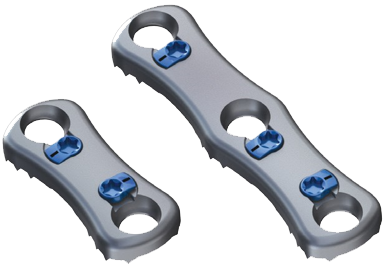
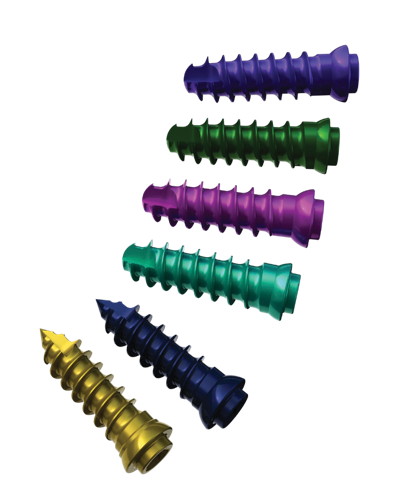
 Key Features
 Key Features
 Key Features