How to Choose the Right Bone Graft Supplier?

Choosing the right bone graft supplier is a clinical decision, not a simple purchasing task. The supplier’s material may influence handling, healing, infection control, and surgical confidence. As orthopedic biomaterials researcher Dr. Stuart B. Goodman has stated, “The right graft must match the biology, mechanics, and clinical objective.” That principle deserves careful attention.

A reliable supplier should provide clear evidence about graft origin, donor screening, processing, sterilization, storage, and traceability. Ask for batch records, certificates of analysis, and published clinical data. A clean package label matters. So does a responsive technical team when a surgeon needs urgent guidance.

Product design also requires practical evaluation. Does the graft remain stable during placement? Does it fit the defect without excessive trimming? Can the supplier maintain consistent availability across multiple procedures? These details often become visible only in the operating room.

Price alone can mislead.

Clinical experience should guide the comparison, but personal preference is not enough. Independent evidence, post-market monitoring, and transparent regulatory documentation strengthen a supplier’s credibility. The company should explain limitations openly, including cases where its product may not be suitable.

There is no perfect supplier. That is worth admitting. Some companies offer strong research but weak distribution. Others provide excellent logistics with limited long-term clinical evidence. A thoughtful selection process compares both strengths and gaps. Surgeons, procurement teams, and hospital quality officers should review the evidence together. The best bone graft supplier is not merely the cheapest or most visible. It is the partner that supports safe, traceable, clinically appropriate care.

How to Choose the Right Bone Graft Supplier?

Define Your Bone Graft Requirements and Clinical Applications

Choosing a bone graft supplier starts with defining the clinical requirement, not comparing catalog prices. The Global Burden of Disease Study 2019 reported about 178 million new fractures worldwide in one year. This demand spans trauma reconstruction, spinal fusion, dental procedures, and revision surgery. Each application needs a different graft profile. Document the defect size, anatomical site, load, vascularity, and expected healing time. Also assess patient factors, including diabetes, smoking, infection risk, and previous nonunion. A moldable particulate graft may suit a contained dental defect. A structural graft may be more appropriate for load-bearing reconstruction. Familiar materials are not automatically suitable.

Supplier evaluation should connect specifications with clinical evidence. Request sterility records, donor screening information, processing details, lot traceability, shelf-life data, and certificates of analysis. Review whether the product’s indications match your local regulatory requirements.

The American Academy of Orthopaedic Surgeons emphasizes evidence-based decision-making when selecting graft substitutes, while published orthopedic literature continues to show variable outcomes across materials and procedures. That variability matters. Marketing language can sound more certain than the evidence.

A useful internal review asks three uncomfortable questions:

What outcome are we buying?
What evidence supports it?
What happens if healing fails?

Cost calculations should include revision risk, handling time, storage conditions, and operating-room waste. No checklist is perfect. Teams can still overestimate material performance or underestimate patient biology. A multidisciplinary review with surgeons, procurement staff, and quality professionals creates a more defensible supplier decision.

Assess Supplier Quality Standards, Certifications, and Compliance

Choosing a bone graft supplier requires more than checking a polished certificate. Verify current ISO 13485 certification, defined product scope, and the certification body’s accreditation. Review ISO 14971 risk controls, sterilization validation, environmental monitoring, and complaint handling. For human-derived materials, inspect donor screening, tissue recovery records, and chain-of-custody controls. AATB accreditation can provide additional evidence for tissue-processing practices, but it should not replace your own supplier audit.

Data supports this caution. The CDC reports that about one in 31 hospital patients has a healthcare-associated infection on any given day. That figure makes sterility evidence, packaging integrity, and transport-temperature records practical purchasing requirements.

The WHO’s global surveillance report estimates that one in ten medical products in low- and middle-income countries may be substandard or falsified. Bone grafts need stricter scrutiny because failures may not appear immediately.

Ask for recent batch records, certificates of analysis, sterility results, expiration studies, and deviation reports. Confirm that lot numbers can be traced from donor or raw material through delivery. Interview quality staff, not only sales representatives. Their answers should match written procedures. Beware of vague claims such as “hospital grade.” They are not measurable standards. A supplier may hold ISO certification yet show weak change-control discipline. That is easy to miss. Request a mock recall and test the response time. Incomplete records should pause approval, even when pricing is attractive. Supplier evaluation is never perfectly objective; document uncertainties and review performance after every delivered lot.

Compare Bone Graft Materials, Technologies, and Product Performance

How to Choose the Right Bone Graft Supplier?

Compare Bone Graft Materials, Technologies, and Product Performance

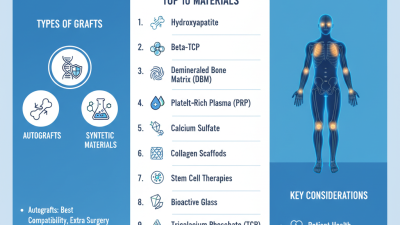
Choosing a bone graft supplier requires more than comparing prices or package sizes. Clinical teams should examine material origin, processing methods, sterility controls, and published evidence. Autograft remains biologically valuable, but it requires a second surgical site. Allograft can reduce that burden, while xenograft materials may offer useful structural stability. Synthetic ceramics and composite grafts provide controlled porosity and predictable manufacturing.

Material behavior matters. Osteoconductive grafts support bone growth along their surfaces. Osteoinductive products may encourage progenitor cells to form new bone, but performance can vary between patients and treatment sites. A porous scaffold may handle well during placement, yet resorb too slowly. Another graft may disappear quickly but provide limited space maintenance. No material wins every case.

Look closely at technology and product documentation. Ask how the supplier validates particle size, pore structure, sterilization, and shelf life. Review independent clinical studies, not only laboratory results. Packaging should protect the graft from moisture, damage, and contamination. Clear lot tracking supports reliable follow-up if concerns arise. Handling details also matter: a graft that crumbles during hydration can waste time in the operating room. I have learned that polished marketing can hide practical weaknesses. Supplier support, training, and responsive complaint handling deserve equal attention. Performance should be judged against the defect type, patient health, surgical technique, and healing expectations—not a single impressive statistic.

Evaluate Manufacturing Capacity, Traceability, and Supply Reliability

How to Choose the Right Bone Graft Supplier?

A capable bone graft supplier should show more than impressive production figures. Review validated equipment, trained operators, cleanroom controls, and documented batch capacity. Ask whether the facility can maintain quality during demand surges. A large factory may still struggle with scheduling. Capacity alone is not enough.

Traceability should follow each graft from incoming material to final shipment. Request sample batch records, labeling procedures, and deviation reports. Lot numbers should connect materials, processing steps, testing results, and release decisions. In practice, small documentation gaps can create serious delays during investigations. No system is perfect, so examine how openly the supplier reports and corrects mistakes.

Tips: Ask for recent on-time delivery data, not promises. Check backup production plans and storage conditions. Confirm how temperature records are monitored during transport. Speak with quality and logistics teams, not only sales representatives. A useful supplier should answer specific questions clearly. Vague answers deserve another review. Also assess communication during shortages or unexpected production changes. Reliability is proven under pressure, not during a polished presentation. Supplier audits require time, and rushed decisions can overlook practical weaknesses.

How to Choose the Right Bone Graft Supplier? - Evaluate Manufacturing Capacity, Traceability, and Supply Reliability

An anonymized procurement scorecard based on commonly used quality, regulatory, traceability, and supply-continuity requirements for bone graft products.
Evaluation Dimension Key Metric Minimum Acceptable Requirement Preferred Target Documents or Evidence to Review Recommended Weight
Manufacturing Quality System Quality management certification A current ISO 13485 certificate covering the applicable product scope and manufacturing site. Certificate is issued by an accredited certification body, with no unresolved major nonconformities. Certificate, scope statement, audit summary, corrective-action records, and certificate validity check. 15%
Manufacturing Capacity Qualified annual capacity Documented capacity is at least 1.5 times the buyer’s forecasted annual demand. Capacity is at least 2 times forecast demand, with validated backup equipment or a second qualified production line. Capacity model, equipment list, production records, staffing plan, and utilization data for the previous 12 months. 12%
Process Validation Validated critical processes Critical processes such as cleaning, demineralization, drying, packaging, and sterilization are validated where applicable. Revalidation intervals, change-control procedures, and process capability data are formally documented. Validation protocols and reports, process capability studies, change-control records, and deviation history. 10%
Material Traceability Lot-level traceability Each finished-product lot can be linked to raw-material lot, processing records, test results, packaging, and release approval. Electronic records support rapid retrieval from source material through distribution and customer delivery. Sample device history record, lot genealogy report, electronic traceability demonstration, and retention policy. 14%
Biological Source Control Source qualification and risk controls The supplier documents source eligibility, collection controls, donor or animal records where applicable, and disease-risk screening. Source sites are periodically audited, and acceptance criteria are supported by documented risk assessments. Source qualification files, screening records, supplier audits, risk assessments, and chain-of-custody documentation. 12%
Sterility Assurance Sterilization and packaging integrity The product has a validated sterilization process or validated aseptic process, plus packaging integrity testing. Sterility assurance level is documented at 10-6 where applicable, with routine bioburden and sterilization monitoring. Sterilization validation, bioburden results, sterility-test records, packaging validation, and environmental monitoring data. 12%
Product Safety and Performance Biocompatibility and performance testing Testing is risk-based and appropriate to the product’s materials, contact type, duration of contact, and intended use. The technical file includes biological evaluation, chemical characterization where relevant, and product-specific performance data. Biological evaluation report, biocompatibility test reports, chemical characterization, specification sheets, and stability data. 12%
Supply Reliability On-time-in-full delivery The supplier provides at least 12 months of shipment performance data and explains any service failures. On-time-in-full performance is at least 95%, supported by defined service-level commitments. Monthly delivery dashboard, back-order records, lead-time history, service-level agreement, and escalation process. 10%
Inventory and Continuity Planning Safety stock and business continuity A documented continuity plan covers raw-material shortages, equipment failure, utility interruption, quality holds, and logistics disruption. Finished-goods safety stock covers at least 8 weeks of forecast demand, or an agreed replenishment alternative is documented. Business continuity plan, disaster-recovery test results, safety-stock policy, alternate-site strategy, and risk register. 8%
Regulatory and Change Control Regulatory status and notification process The supplier maintains applicable registrations, technical documentation, complaint handling, vigilance, and formal change control. Material, process, labeling, packaging, and facility changes are notified before implementation when they may affect form, fit, function, safety, or regulatory status. Regulatory certificates, product registration details, change-control procedure, complaint metrics, recall procedure, and adverse-event records. 9%
Quality Release and Testing Lot release criteria Every lot is released against approved specifications for identity, appearance, dimensions, packaging, and applicable microbiological or chemical requirements. Certificates of analysis are electronically issued, independently reviewed, and directly linked to the lot number. Product specifications, certificates of analysis, release checklists, test-method validation, and out-of-specification trend reports. 10%
Supplier Transparency Audit access and data availability The supplier permits reasonable quality audits and provides requested records within an agreed response time. Remote document review and on-site audit access are available, with corrective actions tracked to closure. Audit agreement, response-time commitment, previous audit findings, CAPA tracker, and document-control procedure. 6%
Scoring guidance: Score each dimension from 0 to 5 based on objective evidence. Multiply the score by the recommended weight, then prioritize suppliers that meet all mandatory safety, traceability, regulatory, and sterility requirements before comparing commercial terms.

Review Pricing, Support Services, and Long-Term Supplier Fit

Choosing a bone graft supplier requires more than comparing unit prices. Grand View Research estimated the global bone grafts and substitutes market at approximately USD 3.3 billion in 2023, with continued growth expected through 2030. Growing demand can support better capacity, but it may also hide higher logistics and service costs.

Request a complete landed-cost model. Include product price, minimum order quantities, shipping, temperature control, storage, and expected waste. A cheaper graft may become expensive when short shelf life causes unused inventory. Ask for batch-level traceability, certificates of analysis, sterility records, and clearly defined complaint-response times. Support matters.

Look for practical assistance, not polished promises. Can the supplier provide surgical education, handling guidance, demand forecasting, and responsive technical support? The International Society for Pharmaceutical Engineering emphasizes documented quality systems, risk management, and supply-chain control in regulated manufacturing environments. Those principles also matter here.

Long-term fit requires evidence. Review audit results, manufacturing capacity, change-notification procedures, and business-continuity plans. Check whether quality metrics are shared regularly. Supplier performance should be measurable.

A market report is only a starting point. Its forecast cannot predict your hospital’s ordering pattern, storage limits, or revision rate. I would also avoid choosing solely from a successful trial order. One smooth delivery proves little. A stronger evaluation uses several quarters of delivery data, transparent communication, and a willingness to discuss weaknesses. That last point is often overlooked.

How to Choose the Right Bone Graft Supplier?

A practical 100-point procurement framework covering pricing, support services, quality, supply continuity, and long-term supplier fit.

Pricing should be reviewed together with product quality, regulatory documentation, clinical education, logistics reliability, and post-sale support. A supplier with the lowest quoted price may not deliver the best total value when training, lead times, inventory risk, and service responsiveness are considered.