| Photobiological safety classification | IEC 62471 classifies lamps and lamp systems into the Exempt Group, Risk Group 1, Risk Group 2, or Risk Group 3 according to exposure-dependent photobiological hazards. | A complete IEC 62471 test report identifying the tested configuration, operating mode, measurement distance, emission spectrum, and risk-group result. | Prefer a documented Exempt Group or Risk Group 1 result for consumer use. A classification without the test conditions is incomplete. | Required |
| Test distance and exposure geometry | Photobiological risk depends on viewing distance, illuminated area, beam angle, exposure time, and whether one panel or multiple panels are used simultaneously. | The exact test distance in metres, detector field of view, panel orientation, active treatment area, and number of panels tested. | Do not compare two safety claims unless their distances and operating conditions are equivalent. A result measured at 1 m may not represent exposure at 20 cm. | Required |
| Emission spectrum | Common red and near-infrared photobiomodulation bands include approximately 620–700 nm and 780–1,100 nm. These ranges are common design choices, not IEC 62471 safety limits. | A calibrated spectral power distribution or spectral irradiance graph covering approximately 200–1,400 nm, including any out-of-band emission. | Visible red and near-infrared output should be clearly separated from ultraviolet output. A product described only as “red light” lacks sufficient spectral information. | Required |
| Ultraviolet emission | IEC 62471 evaluates ultraviolet actinic and eye hazards. For actinic UV exposure, the effective radiant exposure limit used for an 8-hour period is 30 J/m² after spectral weighting. | Measured UV-A, UV-B, and UV-C output, the spectral weighting method, and the effective exposure calculation. | For a consumer red-light panel, measurable UV emission should be absent or explicitly quantified and shown to remain within the applicable exposure limits. | High Priority |
| Blue-light retinal hazard | IEC 62471 assesses blue-light hazard using a wavelength-weighted radiance or irradiance measurement. Bright visible output cannot be judged by lux alone. | The blue-light-weighted measurement, spectral data, exposure duration, measurement distance, and applicable risk-group conclusion. | “No UV” does not prove eye safety. A report must also address visible blue-light retinal hazard, particularly when the panel contains short-wavelength LEDs. | Required |
| Near-infrared visibility and eye exposure | Near-infrared radiation above approximately 780 nm is invisible. Users may not naturally squint or look away, so direct viewing can be difficult to judge without measurements. | Near-infrared spectral output, radiant exposure at the recommended distance, and the eye-safety assessment for the actual treatment mode. | Invisible output should not be treated as automatically safe. Use only the exposure distance and duration supported by the test report and instructions. | Required |
| Irradiance at the treatment distance | Irradiance is measured in W/m² or mW/cm². The conversion is: 1 mW/cm² = 10 W/m². Irradiance changes substantially with distance. | Calibrated irradiance measurements for each wavelength band at the stated treatment distance, preferably with uncertainty and instrument details. | Compare products at the same distance and wavelength band. A single total-power number is not enough to calculate a reliable dose. | Required |
| Exposure dose and timer accuracy | Radiant exposure is calculated as: dose (J/cm²) = irradiance (W/cm²) × time (s). For example, 50 mW/cm² for 10 minutes equals 30 J/cm². | Independent irradiance data, timer resolution, automatic shut-off behavior, and the recommended exposure schedule. | Choose a panel that allows the user to reproduce a stated dose. Avoid relying on “high power” claims without treatment time and distance. | Preferred |
| Beam uniformity across the treatment area | LED panels can produce hot spots and low-output edges. A single centre-point reading may overstate or understate the dose received by most of the body area. | A measurement grid showing irradiance at the centre, corners, and edges at the recommended distance. | Prefer published multi-point measurements. Large differences across the panel make dose estimation less reliable and may increase local eye exposure in hot spots. | Preferred |
| Protective eyewear instructions | IEC 62471 risk classification does not automatically mean that protective eyewear is unnecessary in every use case. Instructions must match the tested risk group and exposure geometry. | Clear eye-use instructions for open-eye, closed-eye, facial, full-body, and near-infrared modes, including any required protective eyewear specification. | Be cautious when the manual says “eye-safe” but provides no IEC 62471 classification, no test distance, and no instructions for direct viewing. | Required |
| Flicker and modulation behavior | IEC 62471 is primarily a photobiological hazard standard and is not a complete assessment of every temporal-lighting concern. Pulse-width modulation can change instantaneous output and user comfort. | Driver description, modulation frequency, oscilloscope measurements, and maximum/minimum output behavior. | Prefer stable, low-modulation operation, especially for facial use or users who report sensitivity to flicker. Do not infer flicker performance from brightness specifications. | Preferred |
| Thermal and surface-temperature control | IEC 62471 addresses optical radiation hazards, not every mechanical or thermal safety issue. LED panels can become warm during extended sessions. | Maximum accessible surface temperature, thermal cut-off behavior, ventilation requirements, and continuous-operation limits. | Choose a unit with documented thermal protection and clear clearance requirements. Photobiological safety does not replace electrical or thermal safety testing. | Required |
| Report traceability and calibration | Reliable results require calibrated instruments, known spectral response, stated uncertainty, and an identifiable laboratory or competent testing organization. | Report number, test date, instrument list, calibration status, test photographs, configuration, and signed conclusions. | Reject generic certificates that do not identify the exact model configuration, operating mode, distance, and measured spectrum. | Required |
| Claim quality for “eye-safe” marketing | “Eye-safe,” “FDA approved,” or “clinically tested” are not substitutes for an IEC 62471 photobiological risk assessment of the actual panel. | Exact wording of the safety claim, supporting standard, independent report, tested configuration, and user instructions. | Accept the claim only when the supporting evidence covers the complete panel, all relevant modes, the recommended distance, and the intended exposure duration. | Verify Carefully |




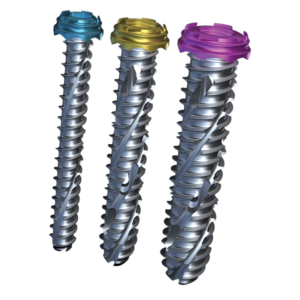

 System Features
 Key Features
 Key Features
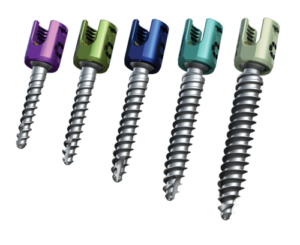 Key Features
 Key Features
 Key Features
 Key Features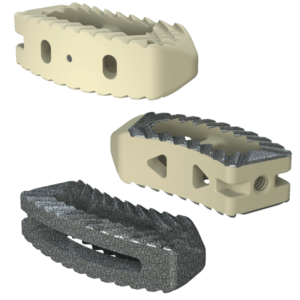
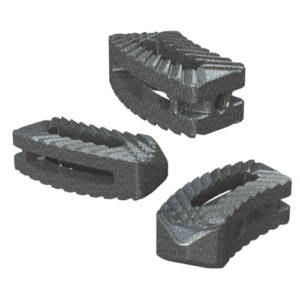
 Key Features
 Key Features
 Key Features