| Legal sourcing | Commercial import status | Commercial importers must comply with the Excise Act, 2001, the Customs Act, and applicable tobacco-product requirements. | Use a licensed and authorized supply chain, maintain commercial invoices, and declare the correct tariff classification, quantity, value, and origin. |
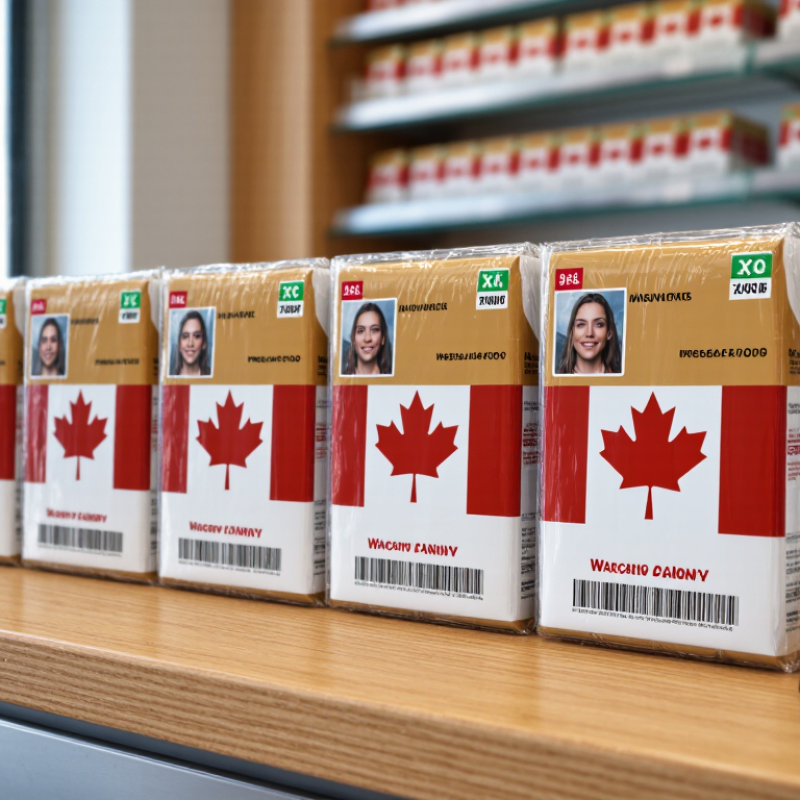
| Canadian tobacco marking | Commercial tobacco products generally require the applicable Canadian excise stamp or marking before legal sale in Canada. | Unmarked or improperly marked products can be detained, seized, or assessed for additional duties and penalties. |
| Age restriction | Federal law prohibits supplying tobacco products to persons under 18; provinces and territories may set a higher minimum age. | Verify the purchaser’s age under the rules of the province or territory where the sale occurs. |
| Product presentation | Tobacco products must comply with Canadian packaging, health-warning, promotion, and advertising restrictions. | Do not rely on foreign packaging as proof of Canadian retail compliance. |
| Federal excise duty | Tax base | Cigarette excise duty is generally calculated on a per-cigarette basis under the federal excise-duty schedule. | Excise duty = Number of cigarettes × Current CRA cigarette-duty rate per cigarette. |
| Rate verification | Federal excise rates are periodically adjusted and must be checked against the current Canada Revenue Agency excise-duty rate table. | Use the rate effective on the date of manufacture, importation, or other applicable accounting event. |
| Illustrative calculation | Quantity: 2,000 cigarettes; current rate: R dollars per cigarette. | Federal excise duty = 2,000 × R = 2,000R dollars. Replace R with the current CRA-published rate before payment or filing. |
| GST/HST calculation | GST/HST tax base | For an imported taxable supply, GST/HST is generally calculated on the customs value plus applicable customs duties and excise taxes. | GST/HST base = Customs value + Customs duty + Federal excise duty + Other taxable adjustments. |
| Ontario example | Ontario HST: 13%. | HST = GST/HST base × 13%. |
| Example using variables | Customs value: $400; customs duty: $0; excise duty: $2,000R. | Ontario HST = ($400 + $0 + $2,000R) × 13%. |
| Input tax credit | A GST/HST-registered business may be able to claim eligible GST/HST paid as an input tax credit, subject to recordkeeping and eligibility rules. | Federal excise duty is not generally recoverable as a GST/HST input tax credit. |
| Provincial and territorial sales tax | Alberta, Northwest Territories, Nunavut, Yukon | GST: 5%; no provincial HST component. | Provincial tobacco taxes may apply separately. |
| British Columbia | Combined GST/PST framework: GST 5% plus applicable provincial tobacco tax. | Confirm the current provincial tobacco-tax rate and registration obligations before sale. |
| Saskatchewan and Manitoba | GST 5% plus applicable provincial sales or tobacco taxes. | Provincial tobacco taxes are separate from federal excise duty and GST. |
| Ontario | HST: 13%, plus applicable provincial tobacco tax. | Use the Ontario HST rate for the HST component and calculate tobacco tax separately where applicable. |
| Quebec and Atlantic provinces | Quebec: GST 5% plus QST 9.975%; New Brunswick, Newfoundland and Labrador, Nova Scotia, and Prince Edward Island: HST 15%. | Check the place-of-supply rules and separate provincial tobacco-tax obligations. |
| CBSA personal import limit | 200-cigarette allowance | After an absence from Canada of at least 48 hours, a resident or visitor may generally include up to 200 cigarettes in the personal exemption, subject to the applicable conditions. | The allowance is a personal exemption, not a commercial-import authorization. |
| Absence under 48 hours | The general 24-hour personal exemption does not provide a tobacco allowance. | Declare tobacco products and follow the CBSA assessment rules if carrying tobacco into Canada. |
| More than 200 cigarettes | Amounts above the personal exemption may be assessed for duties and taxes and may be subject to additional restrictions. | Excess quantity does not become duty-free merely because it is carried in personal luggage. |
| Canadian duty-paid marking | Cigarettes manufactured in Canada and brought back by a traveler may need the required Canadian duty-paid marking to qualify for the personal exemption. | Unmarked cigarettes can be subject to special duty even when the quantity is within 200 cigarettes. |
| Declaration requirement | All tobacco products must be declared to the Canada Border Services Agency when entering Canada. | Failure to declare may result in seizure, penalties, or prosecution. |
| Total landed-cost model | Core formula | Customs value + customs duty + federal excise duty + GST/HST + applicable provincial tobacco tax + brokerage and transportation. | Total landed cost = V + C + (Q × R) + T + P + B. |
| Variable definitions | V = customs value; C = customs duty; Q = cigarette quantity; R = current federal excise rate; T = GST/HST; P = provincial tobacco tax; B = brokerage and transportation. | Use official rates applicable to the import date, destination province, tariff classification, and transaction type. |
| Records to retain | Commercial invoice, packing list, transport document, customs accounting records, excise documentation, tax registration details, and proof of payment. | Accurate records support customs valuation, tax reporting, audit readiness, and proof of lawful sourcing. |






 System Features
 Key Features
 Key Features
 Key Features
 Key Features
 Key Features
 Key Features

 Key Features
 Key Features
 Key Features