China Best Bone Surgery Instruments Supplier?

Choosing the China Best Bone Surgery Instruments Supplier requires more than comparing catalogue prices. It requires evidence, clinical understanding, and dependable quality controls.

The World Health Organization reports that approximately 1.71 billion people live with musculoskeletal conditions worldwide. This burden supports continued demand for orthopedic procedures and specialized bone surgery instruments. However, demand alone does not prove supplier capability. A reliable manufacturer should demonstrate controlled production, material traceability, inspection records, and experience serving regulated healthcare markets.

Look closely at the details.

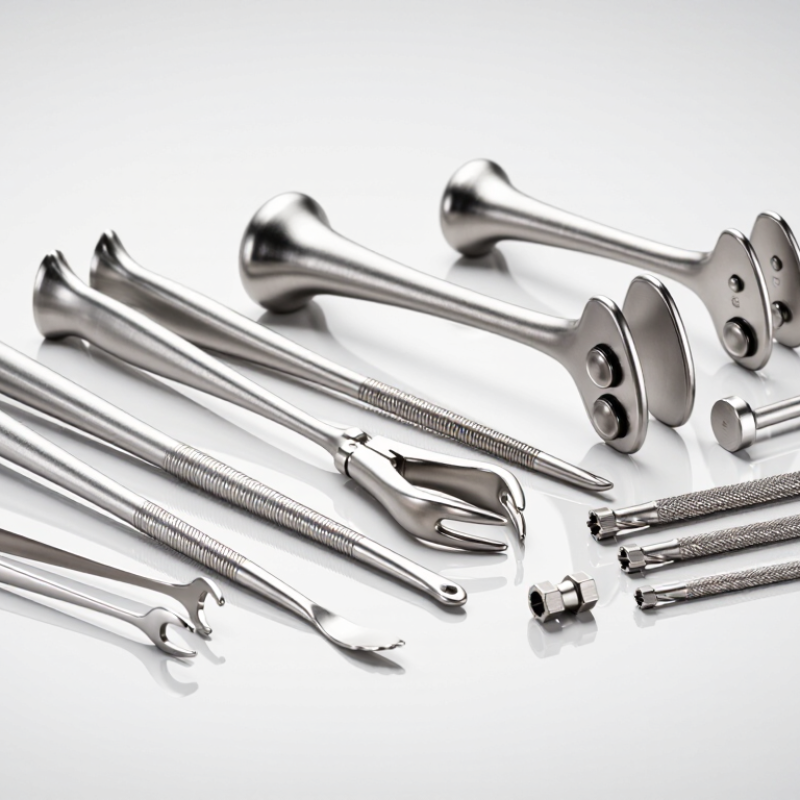
For example, surgical elevators should have smooth working surfaces, secure handles, and consistent dimensions. Bone files need controlled textures and durable stainless steel. Cutting instruments must maintain accurate edges without creating unnecessary tissue damage. These details affect handling during real procedures, not merely product photographs.

Industry research from Grand View Research and Fortune Business Insights shows continued growth in orthopedic devices and surgical instrument markets. Their reports also indicate stronger attention to minimally invasive procedures, product quality, and hospital procurement standards. Market figures vary between reports, so they should guide investigation rather than replace it.

A qualified China supplier should support ISO 13485-based quality systems, appropriate product documentation, batch inspection, and transparent communication. Certifications still need verification. A logo on a webpage is not enough.

Experience matters here.

Buyers should request samples, review sterilization compatibility, confirm packaging integrity, and assess response times before placing larger orders. Even experienced purchasing teams can overlook small inconsistencies in finish or measurement. This is where careful evaluation becomes valuable.

This guide examines supplier selection through product quality, manufacturing experience, compliance awareness, customization capability, and after-sales support. The strongest supplier may not offer the lowest quotation. It should offer dependable instruments that help surgical teams work with confidence.

China Best Bone Surgery Instruments Supplier?

Bone Surgery Instruments: Categories, Materials, and Clinical Uses

China Best Bone Surgery Instruments Supplier?

Bone surgery instruments support cutting, drilling, holding, retracting, and fixation procedures. Common categories include bone saws, osteotomes, curettes, rongeurs, retractors, drills, and screwdrivers. Each tool has a specific role. A sharp osteotome can shape bone precisely. A controlled drill can reduce heat during preparation. Retractors improve visibility around deep surgical fields. Clinical use depends on anatomy, surgical technique, and hospital protocol.

Most instruments use surgical stainless steel because it offers strength, corrosion resistance, and repeated sterilization performance. Tungsten carbide may improve cutting edges. Titanium is lighter and can support selected designs. Material choice still requires careful review. Surface finish, joint movement, balance, and cleaning access affect daily reliability. No instrument is perfect. Even a well-made tool may perform poorly if its handle feels unstable or its hinge traps biological debris.

Tips: Ask suppliers for material specifications, dimensional drawings, fatigue or hardness data, and sterilization guidance. Inspect trial samples under bright light. Check jaw alignment and cutting action. Confirm traceability and consistent quality controls. Clinical teams should also review compatibility with existing trays and equipment. A lower price may seem practical, but difficult cleaning or early wear can increase operating costs. Supplier evaluation should involve surgeons, nurses, and sterile processing staff, not purchasing teams alone.

China’s Supplier Base: Production Scale, Export Trends, and OEM Capabilities

China’s surgical-instrument supplier base is broad, but “best” depends on evidence, not factory size. The National Medical Products Administration reported more than 32,000 medical-device manufacturers in 2023. This scale creates strong specialization in machining, forging, surface treatment, and sterilization packaging. It also creates uneven capability.

UN Comtrade data for HS 9018 shows China exported more than US$13 billion in medical and surgical instruments in 2023. This broader category includes bone-related tools, diagnostic devices, and other equipment. Export momentum reflects mature logistics and established overseas compliance experience. However, the data does not isolate orthopedic instruments. Buyers should avoid treating national export totals as proof of one supplier’s performance.

OEM capability is increasingly measurable. Experienced factories can convert drawings into prototypes, maintain CNC tolerances, document raw-material certificates, and support repeated batch inspection. ISO 13485 certification helps, but it is not a substitute for process audits. Ask for sample traceability, inspection records, packaging validation, and change-control procedures. Small details matter: jaw alignment, ratchet smoothness, passivation quality, and corrosion testing.

The weak point is often communication. A technically capable supplier may still misunderstand a surgeon’s handling preference. Written specifications reduce that risk. So does testing a small pilot batch. Supplier databases and reports show scale; practical verification shows reliability. That distinction is easy to miss.

Quality Assessment Using ISO 13485:2016, ISO 14971, and ASTM F899

China Best Bone Surgery Instruments Supplier?

A dependable bone surgery instruments supplier must show more than polished samples. ISO 13485:2016 requires a controlled quality management system for medical devices. Auditors should examine design records, supplier controls, traceability, and corrective actions. A batch number should connect to steel certificates, inspection results, and sterilization records. Small details matter. For example, jaws should close evenly without visible gaps, burrs, or rough hinge movement.

ISO 14971 adds a risk-based method for identifying hazards and controlling them throughout the product lifecycle. Review whether the supplier evaluates fracture, corrosion, surface damage, cleaning failure, and incorrect dimensions. ASTM F899 specifies stainless steels commonly used for surgical instruments, but material compliance alone does not prove instrument safety. Ask for heat-treatment records and independent material verification. The World Health Organization reports that about one in ten patients experiences harm during healthcare, with more than half considered preventable. Instrument quality cannot eliminate every surgical risk, but weak controls can increase it. A certificate folder may look complete while production records remain incomplete. That possibility deserves attention. Supplier assessment should include factory observations, sample measurements, complaint trends, and responses to nonconformities. Do not rely on certification logos alone. Inspect the actual instruments.

Regulatory Verification: FDA 510(k), EU MDR 2017/745, and CE Compliance

China Best Bone Surgery Instruments Supplier?

For bone surgery instruments, regulatory evidence matters more than a polished catalogue. FDA 510(k) clearance requires substantial equivalence to a legally marketed predicate device. It does not certify every product from one supplier. The FDA FY2023 MDUFA performance report used a 90% target for many 510(k) decisions within 90 FDA days. Buyers should request the exact clearance number, indications, model list, and labeling.

Small details reveal experience. Ask for material certificates, cleaning validation, passivation records, packaging tests, and traceability from steel lot to finished instrument. A supplier should explain whether each reusable instrument is Class I or requires a different EU classification. Guessing here is risky. It happens.

EU MDR 2017/745 requires more than a CE logo. The European Commission’s 2024 MDR monitoring update reported 49 designated notified bodies. Their role depends on device class and conformity route. Review the EU Declaration of Conformity, technical documentation, clinical evaluation, post-market surveillance plan, and vigilance process. Non-EU manufacturers also need an authorized representative in the European Union. CE marking indicates conformity with applicable requirements, not superior surgical performance. A serious supplier can show controlled revisions, complaint records, and audit-ready procedures, preferably aligned with ISO 13485. Reports and certificates can still be incomplete. Independent verification remains necessary before procurement.

Supplier Selection Metrics: Traceability, Sterilization, Lead Time, and Cost

China Best Bone Surgery Instruments Supplier?

Supplier Selection Metrics: Traceability, Sterilization, Lead Time, and Cost

Selecting a bone surgery instrument supplier requires evidence, not polished catalog images. Traceability should connect each instrument to material certificates, inspection records, and production batches. Ask whether serial numbers or applicable device identifiers remain readable after repeated cleaning. A supplier should explain nonconformity handling clearly. Vague answers deserve caution.

Sterilization controls need equal attention. For reusable instruments, review validated cleaning instructions and steam sterilization parameters. Check whether packaging protects cutting edges during transport. Sterilization records should identify the cycle, load, operator, and release decision. A certificate alone is not enough. It may confirm paperwork, not actual process discipline.

Lead time should include sampling, production, inspection, shipping, and possible rework. Request capacity data for peak periods. A short promise can hide unfinished tooling. Cost comparisons must include freight, duties, inspection, replacement parts, and reprocessing expenses. The cheapest quotation may become expensive after one damaged clamp or delayed shipment. I have found that supplier evaluations sometimes overvalue price and undervalue communication speed. That is a weakness worth admitting. A small pilot order can test dimensional consistency, surface finish, packaging, and response to complaints before larger commitments.