What Are the Top Types of Footwear Inspection in 2026?
In 2026, Footwear Inspection is becoming more precise, data-driven, and practical. Buyers no longer judge shoes by appearance alone. They examine construction, comfort, safety, durability, and production consistency. A clean upper can still hide weak stitching, uneven bonding, or a poorly shaped insole.
The most common inspection types include visual inspection, measurement checks, material testing, and workmanship assessment. Visual inspectors look for loose threads, color differences, wrinkles, stains, and surface damage under controlled lighting. Measurement checks compare shoe length, width, heel height, and pair matching against approved specifications. Material testing examines leather, mesh, rubber, foam, and synthetic components for strength and flexibility. Small details matter.
Performance testing adds another layer. Inspectors may assess sole adhesion, flexing resistance, abrasion, water resistance, slip behavior, and repeated wear. Factory audits also review production records, calibration practices, worker training, and corrective actions. These records help connect a failed sample with its real production cause.
But inspection is not perfect. Sampling can miss a hidden defect. A laboratory result may not reflect every walking condition. Even experienced inspectors can disagree about minor finishing issues. That is why reliable footwear programs combine trained human judgment, documented procedures, suitable equipment, and independent verification. In practice, the strongest approach is not the most complicated one. It is the method that matches the product, customer, market, and actual risks. Manufacturers should review findings honestly and improve the process, rather than simply repair one defective pair.
Visual and Workmanship Inspection
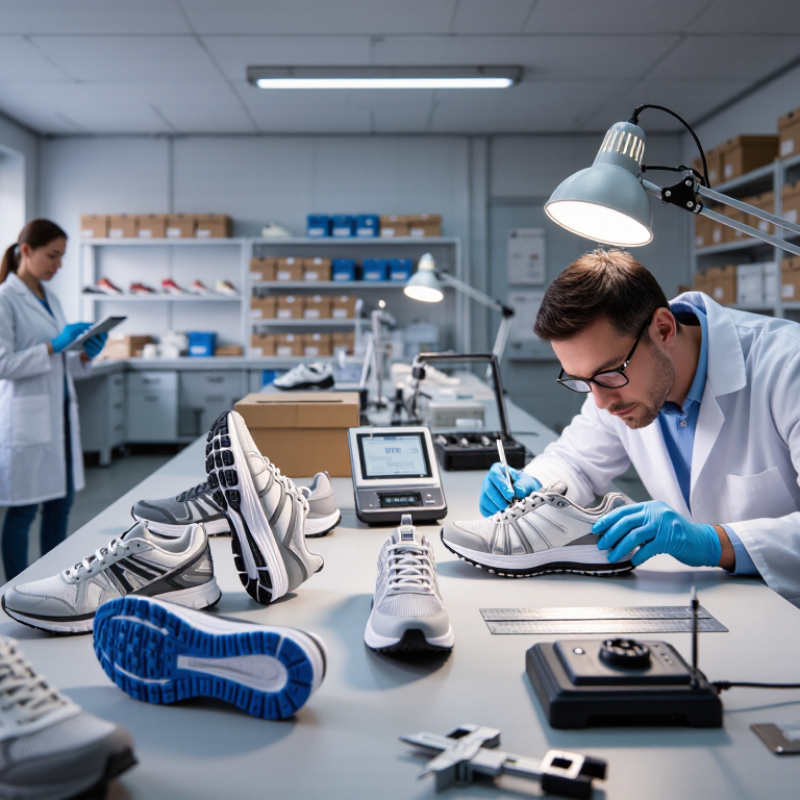
Visual and workmanship inspection remains a practical control point in footwear quality. The World Footwear Yearbook 2024 reports 23.9 billion pairs were produced globally in 2023. At that scale, small defects can multiply quickly. Inspectors examine uppers, linings, stitching, soles, and finishing under stable lighting. They check color consistency, panel alignment, wrinkles, loose threads, glue marks, and uneven edges. Left and right shoes must match closely.
Details matter most.
A trained inspector also verifies size labels, outsole patterns, logos, and packing accuracy. Measurement tools help confirm length, width, heel height, and symmetry. ISO 2859-1:2023 provides sampling principles for acceptance quality limits. However, sampling cannot replace good judgment. A carton may pass inspection while one uncomfortable shoe escapes detection. That assumption deserves challenge.
Workmanship reports should record defect location, severity, photographs, and corrective action. Major defects include open seams, visible bonding failure, or severe shape distortion. Minor defects may involve small scratches or slight thread irregularities. SATRA’s technical guidance emphasizes controlled testing and repeatable procedures across footwear production. Human fatigue remains a weakness, especially during long shifts. Rotating inspectors and using reference samples can reduce inconsistent decisions. Still, visual judgment is never perfectly objective. Skin tone, material texture, and factory lighting can change what inspectors notice. Clear criteria help, but experienced review is still essential.
Inspection checkpoints should be applied according to the footwear specification, approved sample, applicable safety requirements, and the agreed sampling plan.
Dimensional, Fit, and Comfort Inspection
What Are the Top Types of Footwear Inspection in 2026?
Dimensional, Fit, and Comfort Inspection
Dimensional inspection checks length, width, heel height, toe-box volume, and symmetry. Inspectors compare each shoe with approved technical specifications. They also measure left and right shoes separately. Small differences can create pressure across the forefoot or looseness around the heel. The World Footwear Yearbook 2024 reported global footwear production of about 23.9 billion pairs in 2023. At that scale, minor dimensional errors can affect millions of products. Consistent measurement is not optional.
Fit inspection adds real-world movement. Testers examine heel retention, flex points, toe clearance, and upper tension during walking. A static size check can miss rubbing near the ankle. It can also overlook instability on stairs. The American Podiatric Medical Association reported that 77% of surveyed adults had experienced foot pain. Poor fit is not always the only cause, but it remains a practical inspection concern. Comfort testing should record pressure, heat, moisture, and fatigue over time. Human feedback matters. It is also imperfect.
Tips: Use calibrated tools and the same measuring method for every sample. Test several foot shapes, not only one “standard” foot. Photograph pressure marks after wear trials. Review complaints by size and location. A comfortable first fitting may still fail after four hours. That is where inspection needs more honesty.
Top Types of Footwear Inspection in 2026
Dimensional, fit, and comfort inspection use different quantitative checkpoints to evaluate footwear consistency and wearability.
The chart presents practical reference checkpoints commonly used in footwear quality programs: dimensional deviation in millimeters, peak fit pressure in kilopascals, and wearer comfort on a five-point scale. Exact acceptance limits vary by footwear construction, size, materials, and test protocol.
Safety, Compliance, and Chemical Inspection
What Are the Top Types of Footwear Inspection in 2026?
Safety inspection now examines how footwear performs under real pressure. Inspectors check sole bonding, heel stability, slip resistance, stitching, and sharp internal edges. A safety shoe may look strong but fail after repeated flexing. Small defects matter.
Compliance inspection connects product details with market requirements. Teams verify labeling, size accuracy, material declarations, packaging, and test records. They also review production samples against approved specifications. Clear records build trust. However, paperwork cannot replace physical testing. I have seen well-organized files hide inconsistent factory results.
Chemical inspection is receiving greater attention in 2026. Laboratories may screen leather, rubber, adhesives, dyes, and metal parts for restricted substances. Sampling must cover different colors, materials, and production batches. Testing only one pair can create false confidence. Results should come from a competent laboratory using validated methods. Inspectors should also confirm chain of custody and sample condition.
No inspection catches everything. That is worth remembering. A stronger program combines factory checks, laboratory analysis, and trained human judgment. Footwear inspectors should photograph defects, record measurements, and explain why a failure occurred. This approach supports safer products and more dependable compliance decisions. Still, inspection plans need regular review because materials, suppliers, and market expectations keep changing.
Automated and Data-Driven Footwear Inspection in 2026
In 2026, footwear inspection is shifting from random checking to continuous, measurable control. Automated vision systems scan stitching, glue lines, wrinkles, color differences, and surface marks. Cameras capture each shoe under stable lighting. Software compares images with approved reference standards. This reduces fatigue, but it does not remove judgment. A dark upper can still confuse a camera.
Dimensional inspection measures length, width, heel height, and pair symmetry. Sensors record results within seconds. Data dashboards reveal drift across sizes, molds, shifts, and production lines. Material testing adds evidence through flexing, abrasion, bond-strength, and water-resistance checks. Automated machines repeat these tests more consistently than manual sampling. Still, sampling can miss rare failures. That weakness deserves attention.
The strongest programs connect inspection data with production settings and operator observations. A sudden rise in sole separation may indicate adhesive temperature changes. A growing crease pattern may point to poor lasting pressure. Inspectors should verify alerts with physical checks before rejecting large batches. False alarms waste materials and weaken trust. Human review remains important, especially for comfort, finish, and unusual defects. Reliable records should include timestamps, sample images, test conditions, and corrective actions. Clean data supports traceability, but incomplete data creates confident mistakes.





 System Features
 Key Features
 Key Features
 Key Features
 Key Features
 Key Features
 Key Features
 Key Features
 Key Features
 Key Features