Top 10 Red Face Light Therapy Devices for Global Buyers
Red Face Light Therapy has moved from specialist clinics into bathroom cabinets, beauty retailers, and professional skincare practices. Its appeal is practical: a small face mask can deliver timed red or near-infrared light while users read, travel, or prepare for sleep. Yet product quality varies widely. Wavelength, irradiance, treatment distance, heat management, and eye protection can change the user experience significantly.
Market research reflects this growing interest. Grand View Research’s 2024 LED light therapy market analysis identifies consumer skincare as a major growth area, supported by home-use devices and expanding beauty technology sales. Fortune Business Insights also reports continued growth across the broader light therapy market, although estimates differ because companies use different product categories and regional definitions. The numbers are useful, but not perfect. Buyers should treat forecasts as direction, not proof of clinical performance.
This guide evaluates ten devices for global buyers using practical and evidence-aware criteria. We consider published specifications, wavelength transparency, comfort, charging design, warranty coverage, retailer support, and available safety documentation. Independent clinical research suggests that red and near-infrared light may support selected cosmetic goals, including the appearance of fine lines, but results depend on consistent use and realistic expectations. FDA clearance, CE marking, or other regional compliance does not guarantee identical effectiveness. It mainly addresses regulatory requirements. Users should check local rules, follow manufacturer instructions, protect their eyes, and seek medical advice for photosensitive conditions or medication concerns. Small details matter. A mask that slips, overheats, or lacks clear instructions may become an expensive drawer item.
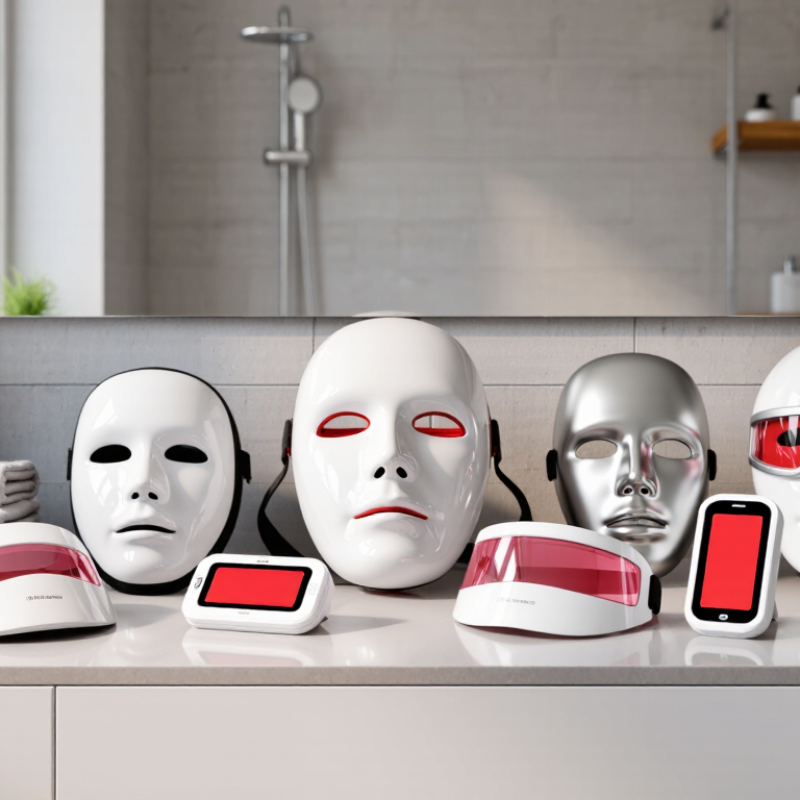
What Red Face Light Therapy Is and How It Works
Red face light therapy uses specific wavelengths to deliver gentle, non-thermal light to the skin. Red light, often around 630–660 nanometres, mainly reaches surface tissues. Near-infrared light may travel deeper. Cells can absorb this energy through mitochondrial pathways, potentially supporting ATP production, circulation, and normal repair activity. Some studies also suggest reduced inflammatory signalling and improved collagen formation. The science is promising, but not tidy. Results differ with wavelength, power, treatment distance, and skin condition.
In practical use, the face should be clean and dry before treatment. Follow the device’s timing instructions, since longer sessions are not automatically better. Use approved eye protection when required. People using photosensitising medicines or managing eye conditions should ask a qualified healthcare professional first. Light therapy may support skin care, but it cannot replace treatment for persistent acne, rosacea, pigmentation, or suspicious lesions. Patch testing is still sensible, even when the device feels cool.
Tips: Keep a simple treatment record with dates and photos taken under similar lighting. Use the same routine for several weeks before judging changes. Avoid applying irritating acids or strong retinoids immediately beforehand. Mild warmth can occur; pain, swelling, or lasting redness deserves a pause and professional advice. Be honest with expectations. A brighter mirror reflection may appear before measurable skin changes, and sometimes neither appears.
Top 10 Red Face Light Therapy Devices for Global Buyers
Red face light therapy uses non-ionizing red and near-infrared light. The chart compares ten commonly used wavelength points from the red and near-infrared ranges and shows their corresponding photon energy.
Red light is commonly described as approximately 620–700 nm, while near-infrared light generally begins above 700 nm. Longer wavelengths carry lower photon energy but may penetrate farther into tissue. Actual treatment performance also depends on irradiance, exposure time, treatment distance, coverage, and eye-safety design. Photon energy values are calculated using E = 1240 ÷ wavelength (eV).
Data basis: wavelength categories used in photobiomodulation research and the standard photon-energy relationship; values are not brand or company specifications.
Top 10 Red Face Light Therapy Devices for Global Buyers
Choosing among the top 10 red face light therapy devices for global buyers requires more than comparing prices.
A reliable shortlist should examine wavelength, irradiance, treatment coverage, comfort, and safety documentation. Most facial devices use red light near 630–660 nanometers, sometimes with near-infrared light around 810–850 nanometers. Specifications matter. Look for testing details, not only attractive promises.
Global buyers should check voltage compatibility, plug types, local warranty support, and shipping conditions. A flexible mask may suit travelers, while a rigid panel can provide broader coverage at home. Eye protection should feel secure without causing pressure around the nose. Clear session timers are useful, especially for beginners. Buyers should also review cleaning instructions and return policies before ordering.
Evidence remains mixed for some cosmetic claims. Improvements may appear gradually, and results can differ with age, skin sensitivity, medication, and daily habits. Do not treat a device as a replacement for professional medical care. The most trustworthy options explain expected limits and publish measurable output data.
I would not rank comfort below power; an impressive device is useless if it stays in a drawer. My own comparison would also include repair access, because electronic waste is an overlooked cost for international customers. A careful buyer may need to question the ranking itself.





 System Features
 Key Features
 Key Features
 Key Features
 Key Features
 Key Features
 Key Features
 Key Features
 Key Features
 Key Features