| Botanical Identity | Source plant | Clitoria ternatea, a leguminous flowering plant commonly known as butterfly pea. | Its recognizable botanical source supports demand for naturally colored food and beverage ingredients. |
| Natural Color | Main pigment group | The blue color is mainly associated with water-soluble anthocyanins known as ternatins. | Consumers and food manufacturers value the powder as a plant-based alternative to many synthetic colorants. |
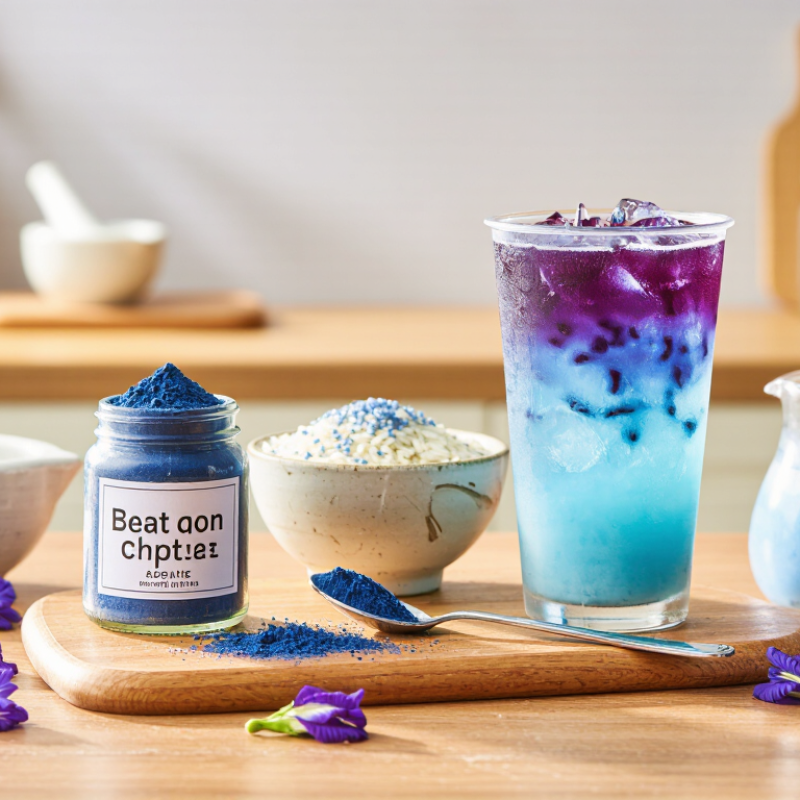
| Color Response | Effect of acidity | Infusions are generally blue near neutral pH and can shift toward purple, violet, or pink as acidity increases. | The visible color change makes the powder useful in drinks, desserts, confectionery, and culinary presentation. |
| Plant Material | Part commonly processed | Fully opened butterfly pea flowers are typically collected, separated from unwanted plant material, and prepared for drying. | Using flowers helps produce a more consistent color and reduces unwanted stems, leaves, and foreign matter. |
| Harvest Quality | Important incoming checks | Color intensity, cleanliness, absence of visible mold, foreign matter, insects, and abnormal odor are key quality indicators. | Careful sorting reduces contamination risk and improves the consistency of the finished powder. |
| Primary Processing | Cleaning and sorting | Flowers are inspected and cleaned using manual sorting, sieving, or other food-safe separation methods before drying. | Cleaning is necessary because raw botanical materials may contain soil particles, insects, and other plant fragments. |
| Moisture Reduction | Drying methods | Common approaches include shade drying, solar drying, and controlled hot-air drying. The method should limit excessive heat, light, and humidity. | Drying lowers water activity, helps slow microbial growth, and improves storage stability. |
| Pigment Protection | Key processing risks | Excessive heat, prolonged exposure to light, oxygen, and moisture can reduce color quality and promote pigment degradation. | Controlled drying and protective packaging help retain the characteristic blue color and functional value. |
| Milling | Powder formation | Once sufficiently dry, the flowers are milled and passed through a sieve to obtain a more uniform particle size. | Uniform particles improve mixing, dispersion, appearance, and portion control in finished products. |
| Solubility | Behavior in water | The powder contains water-soluble color compounds, but whole botanical powder may also include insoluble plant fiber and natural solids. | It is suitable for smoothies, teas, bakery mixes, and desserts, although complete clarification is not expected in every application. |
| Flavor Profile | Taste and aroma | Butterfly pea powder is generally mild and earthy, with a less intense flavor than many strongly aromatic herbs and spices. | A relatively mild flavor allows the color to be used in a broad range of sweet and beverage formulations. |
| Common Applications | Food and beverage uses | Typical uses include herbal beverages, smoothies, natural blue food coloring, desserts, baked goods, sauces, and decorative toppings. | Its versatility expands the number of product categories that can use the ingredient. |
| Storage Conditions | Recommended protection | Store in a cool, dry, dark environment in a tightly sealed, food-grade package protected from moisture and oxygen. | Proper storage helps preserve color, aroma, flowability, and microbiological quality during its shelf life. |
| Quality Testing | Typical laboratory checks | Moisture, water activity, microbiological quality, foreign matter, color characteristics, and pesticide or heavy-metal compliance may be evaluated. | Testing supports food safety, batch consistency, and compliance with applicable regulations. |
| Consumer Appeal | Main demand drivers | Demand is supported by interest in botanical ingredients, visually distinctive foods, plant-based products, and naturally derived colors. | The ingredient combines visual novelty with a simple plant-based positioning, making it attractive for product innovation. |







 System Features
 Key Features
 Key Features
 Key Features
 Key Features
 Key Features
 Key Features






 Key Features
 Key Features
 Key Features