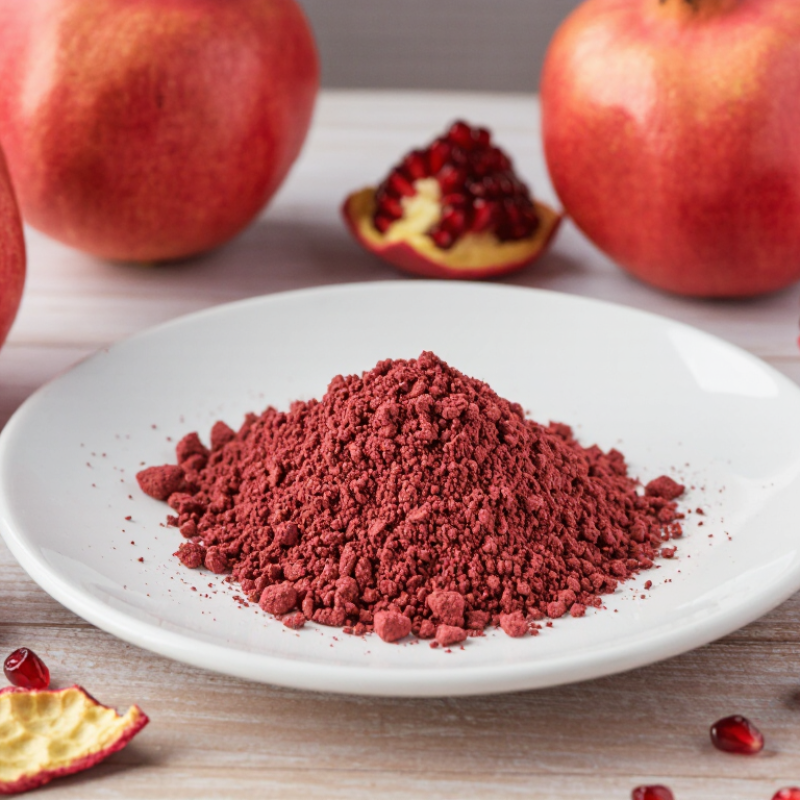
| Material Origin | Dried outer skin and rind of pomegranate fruit, milled into a fine powder. | Can be sourced as a value-added fruit-processing by-product, supporting raw-material utilization and waste reduction. |
| Key Natural Constituents | Contains dietary fiber, tannins, polyphenols, and other naturally occurring plant compounds. | Provides a multifunctional botanical ingredient for food, personal-care, and research-oriented formulations. |
| Food and Beverage Applications | Used in selected bakery products, functional food prototypes, fiber blends, teas, and botanical formulations where permitted by local regulations. | Allows buyers to serve multiple product categories with one plant-based raw material, subject to food-grade testing and approval. |
| Cosmetic and Personal-Care Applications | Included in exfoliating powders, masks, soaps, scrubs, and botanical skin-care formulations. | Dry powder format is convenient for formulators seeking plant-based positioning and simplified ingredient storage. |
| Animal Nutrition Potential | May be evaluated as a plant-based fiber or polyphenol source in animal-feed research and formulations. | Offers an additional outlet for the material, but species suitability, dosage, safety, and feed regulations must be verified before use. |
| Particle Size Options | Commonly supplied as coarse, medium, or fine powder; exact mesh or micron size depends on the application. | Different particle sizes support flexible processing, dispersion, extraction, and texture requirements. |
| Color and Appearance | Typically ranges from reddish-brown to dark brown, with natural variation caused by fruit variety and drying conditions. | Natural color can support botanical product positioning, while color consistency should be confirmed by an agreed specification. |
| Moisture and Storage | Commercial specifications commonly require a low-moisture dried powder; the buyer should define the maximum moisture level and water-activity requirement. | Lower moisture generally improves storage stability, but protection from humidity, heat, light, and contamination remains essential. |
| Primary Packaging | Food-grade polyethylene inner liner placed inside kraft paper bags, woven bags, or fiber drums. | Multi-layer packaging helps reduce moisture uptake, odor transfer, and contamination during international transportation. |
| Common Commercial Pack Sizes | Small trial packs may be used for sampling; bulk shipments commonly use approximately 10–25 kg bags or larger palletized units, depending on the contract. | Pack-size flexibility supports laboratory trials, private-label production, and full-container procurement. |
| Pallet and Container Efficiency | The dry, concentrated format generally requires less volume than fresh fruit skins and can be palletized for ocean or air freight. | Reduced bulk and better handling efficiency can simplify warehousing and lower logistics complexity. |
| Quality-Control Documents | Typical buyer requirements include a specification sheet, certificate of analysis, microbiological results, heavy-metal testing, pesticide-residue testing, and allergen or GMO statements where applicable. | Documented testing supports import clearance, customer approval, traceability, and consistent batch qualification. |
| Traceability Requirements | Batch number, production date, country of origin, raw-material source, and storage conditions should be recorded. | Clear traceability improves recall readiness and helps buyers manage regulatory and customer audits. |
| Supply Availability | Availability depends on pomegranate harvest cycles, fruit-processing volumes, drying capacity, and regional agricultural conditions. | Forward contracts, approved alternative origins, and safety stock can reduce seasonal supply interruptions. |
| Regulatory Considerations | Permitted uses, labeling rules, contaminant limits, and import documentation differ by destination market and intended application. | Early regulatory review helps prevent customs delays and avoids using a material outside its approved category. |
| Best-Fit Buyer Profile | Ingredient distributors, botanical formulators, food manufacturers, cosmetic developers, and research organizations. | A versatile powder format can support diversified sourcing portfolios and multiple downstream product concepts. |







 System Features
 Key Features
 Key Features
 Key Features
 Key Features
 Key Features
 Key Features




 Key Features
 Key Features
 Key Features