| Ingredient Identity | Ursolic acid; pentacyclic triterpenoid | Confirms that the intended active botanical constituent is being used rather than a chemically similar triterpene. | Verify identity using HPLC retention time together with an orthogonal method such as FTIR, MS, or NMR where appropriate. |
| Chemical Formula and Molecular Weight | C30H48O3; relative molecular mass approximately 456.70 g/mol | Supports accurate analytical calculations, specification development, and conversion between mass-based and molar-based quantities. | Confirm the reported molecular data against the approved raw-material specification and certificate of analysis. |
| HPLC Assay | Target ≥98.0% by validated HPLC method | A high assay reduces active-content variability and makes it easier to maintain consistent potency across capsules, tablets, powders, or extracts. | Review the chromatographic method, reference standard traceability, system suitability, calculation basis, and individual batch results. |
| Assay Consistency | Batch results should remain within the approved internal specification, with documented trend monitoring | Consistent incoming material helps minimize adjustments during blending and reduces the risk of out-of-specification finished products. | Compare multiple batch COAs and monitor assay results using a supplier-qualification and trend-review program. |
| Chromatographic Purity Profile | Main peak should be clearly resolved from related compounds and process impurities | Improves control over the chemical profile of the active ingredient and supports reproducible formulation performance. | Assess chromatograms, peak integration rules, resolution, blank interference, and known or unknown impurity reporting. |
| Botanical Source Traceability | Source plant, plant part, extraction or purification route, and processing location should be documented | Traceability supports raw-material qualification, supply continuity, sustainability review, and investigation of batch-to-batch differences. | Request a complete material history, lot identification, process description, and change-notification commitment. |
| Physical Appearance | Typically a white to off-white powder; exact appearance should be defined in the approved specification | A consistent appearance can help detect contamination, unexpected degradation, or significant processing variation before production. | Inspect color, odor, visible contamination, and powder uniformity using documented sampling procedures. |
| Water Solubility | Ursolic acid is practically insoluble in water | Poor aqueous solubility may affect dispersion and bioavailability, making dosage form, particle engineering, excipients, or delivery technology important. | Evaluate particle size, wetting, dispersion behavior, and compatibility with the selected dosage-form process. |
| Moisture Control | Set a product-specific limit based on stability data and manufacturing requirements | Moisture can influence powder flow, agglomeration, microbial risk, packaging requirements, and long-term stability. | Test by a suitable validated method, such as loss on drying or Karl Fischer titration, and monitor storage conditions. |
| Residual Solvents | Should comply with applicable regulatory limits for the solvents used in processing | Controls potential safety risks and supports compliance when the material is used in finished dietary supplements. | Use a validated residual-solvent method, commonly gas chromatography, and review the declared extraction solvents. |
| Elemental Impurities | Lead, arsenic, cadmium, and mercury should meet applicable regulatory or pharmacopoeial limits | Botanical materials may accumulate environmental contaminants; control is essential for consumer safety and market access. | Use a qualified laboratory and an appropriate technique such as ICP-MS or ICP-OES, with results reported by lot. |
| Microbiological Quality | Total microbial counts and specified pathogens should meet the applicable finished-product or raw-material requirements | Supports product safety and reduces the risk of microbial deterioration during manufacturing and storage. | Review total aerobic count, yeast and mold count, and relevant pathogen testing based on the intended market and dosage form. |
| Stability and Packaging | Storage conditions and retest or expiry period should be supported by stability data | Protection from heat, humidity, oxygen, and light helps preserve assay and physical performance throughout the supply chain. | Evaluate stability-indicating assay results in the proposed container-closure system under suitable real-time and accelerated conditions. |
| Documentation Readiness | Certificate of analysis, specification, SDS, allergen statement, non-GMO statement where applicable, and change-control information | Complete documentation accelerates qualification, supports audits, and improves regulatory dossier preparation. | Check document consistency, method references, lot numbers, approval dates, signatures, and revision history. |
| Manufacturing Benefit of ≥98% Assay | High-purity material with controlled impurity profile and repeatable batch results | Can simplify potency calculations, reduce the amount of corrective overage, improve blend uniformity, and support more predictable finished-product specifications. | Confirm the benefit through process validation, blend-uniformity data, finished-product assay, and stability monitoring. |






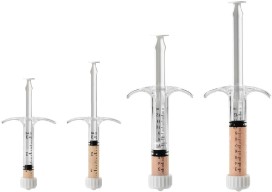
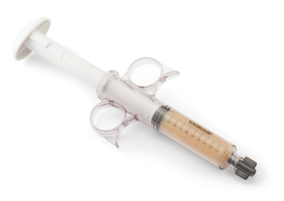
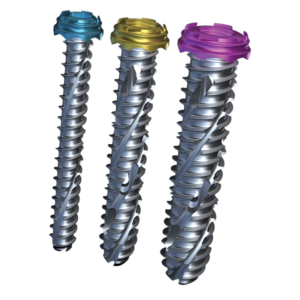

 System Features
 Key Features
 Key Features
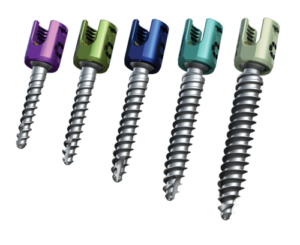 Key Features
 Key Features
 Key Features
 Key Features


 Key Features
 Key Features
 Key Features